Machu Picchu in the Mist
The best moments were fleeting ones

Our Peruvian trek took us from the chilly heights of the Salkantay Pass to the warmer and thicker air of Aguas Calientes, the town nestled at the base of Machu Picchu. By then, I was certain that the number one highlight of our Peru trip was behind us. I already knew what Machu Picchu looked like. The tourists thronging Machu Picchu would no doubt take away from the experience. How could Machu Picchu top the majesty of Salkantay Mountain? I’d soon find out.
We set out for Machu Picchu with our guide at six o’clock in the morning, under a looming gray sky, even though the place wouldn’t be open until seven. Our guide made sure we had our rain ponchos in our day packs. Already there was a long queue waiting to board the buses that would take us up the mountain to the site:

We had to present not only our admission tickets but our passports in order to board the buses. The bus ride consisted of a series of dizzying hairpin turns. Once at the top, we had to stand in lines that reminded me of waiting for the Indiana Jones ride at Disneyland. Surely there were more people waiting to get into Machu Picchu this morning than there were people who’d lived in Machu Picchu back in the 15th century. After hiking more or less by ourselves on the Salkantay Trek, the sight of all these people was dispiriting.
This view greeted us upon our entrance into the site:
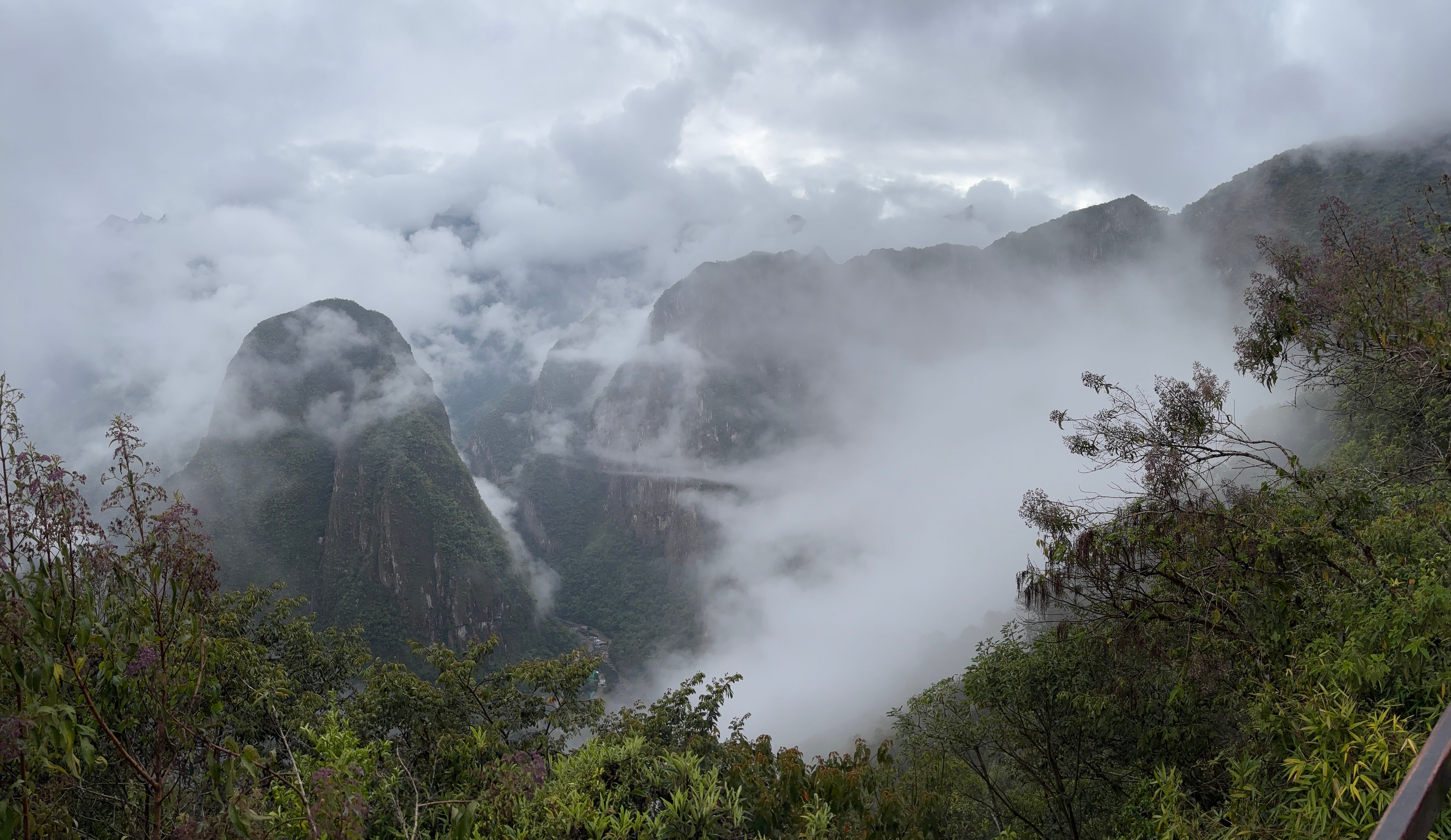
On one hand, the mist blocked our view. On the other hand, the mist added unique drama. This was our one and only chance to visit one of the modern wonders of the world. We’d just have to put up whatever the weather would allow.
There was also much drama among us jostling tourists at the site’s prime viewing spot. We kept our cameras at the ready, breathlessly waiting for the mist to clear long enough for us to take a picture of Machu Picchu in its unobstructed glory. Mother Nature seemed more than happy to keep us in suspense:

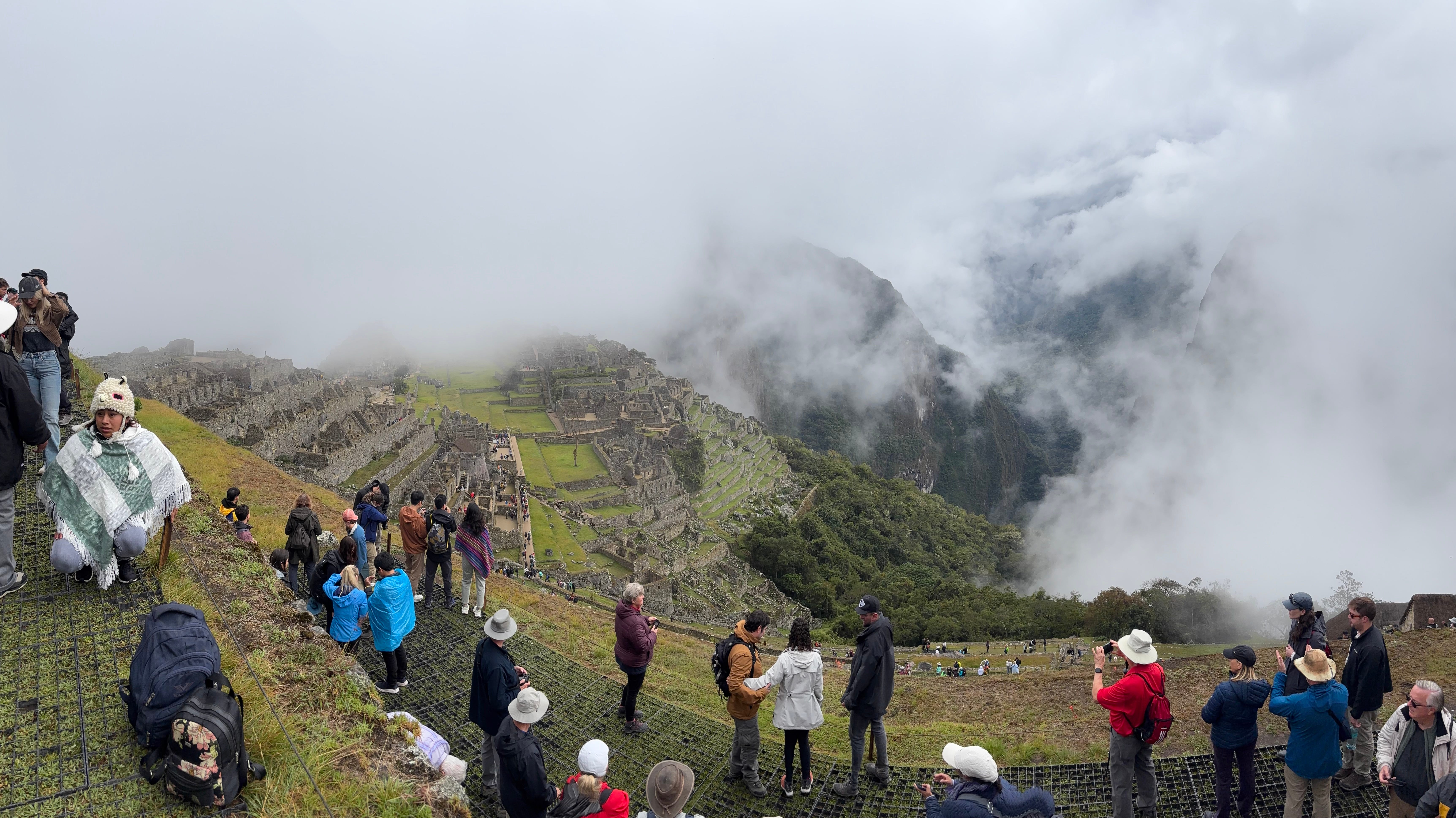
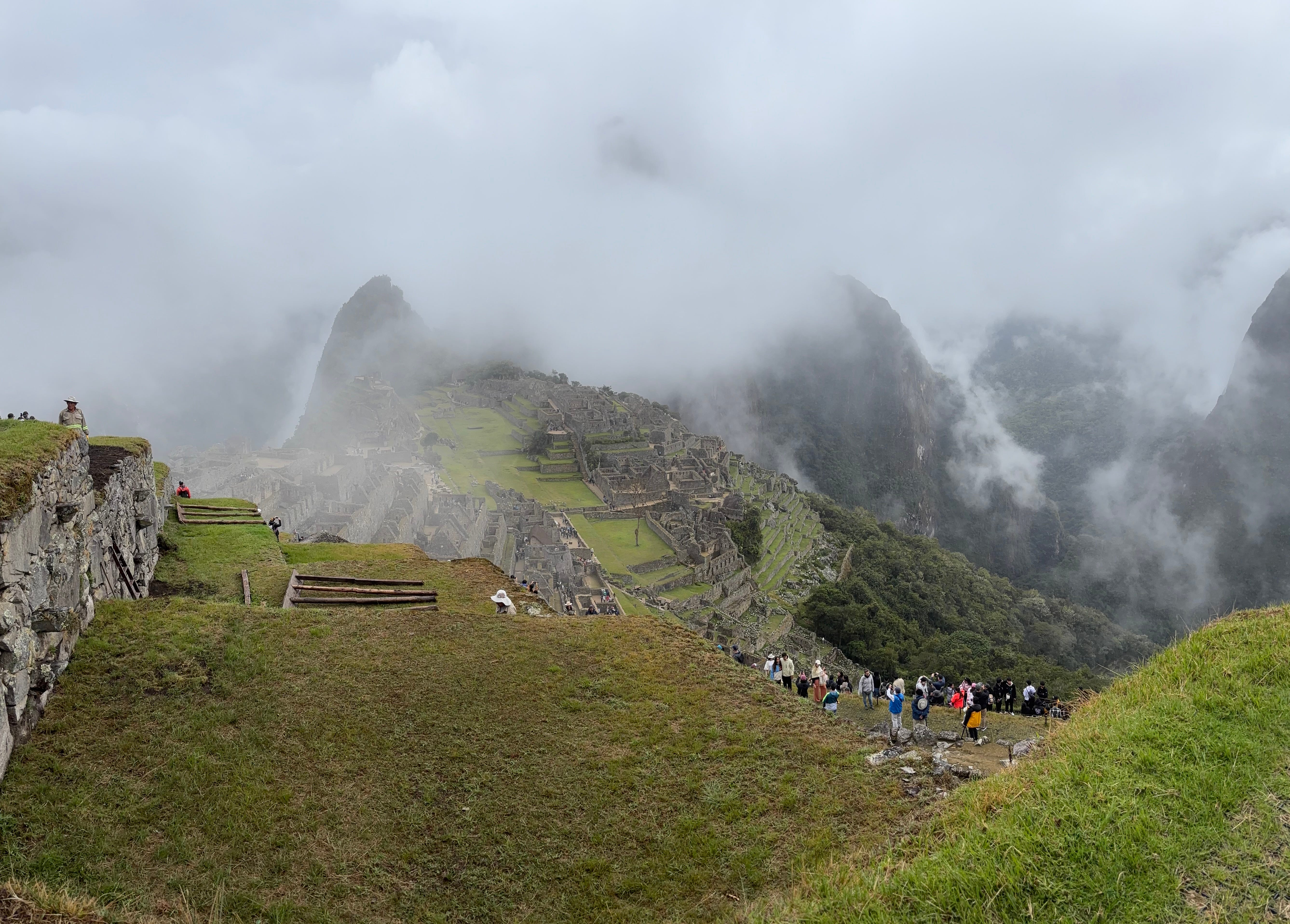
While we waited, a woman waving a small Polish flag led a group of Polish-speaking tourists, speaking fluently in both Polish and Spanish. Another group of tourists took an exuberant photo of themselves behind a full-sized South Korean national flag. Dan and I got to talking with a young couple from Taiwan—they’d made an epic journey, flying from Taipei to Los Angeles to Panama City to Lima to Cusco. Such was the site’s global appeal.
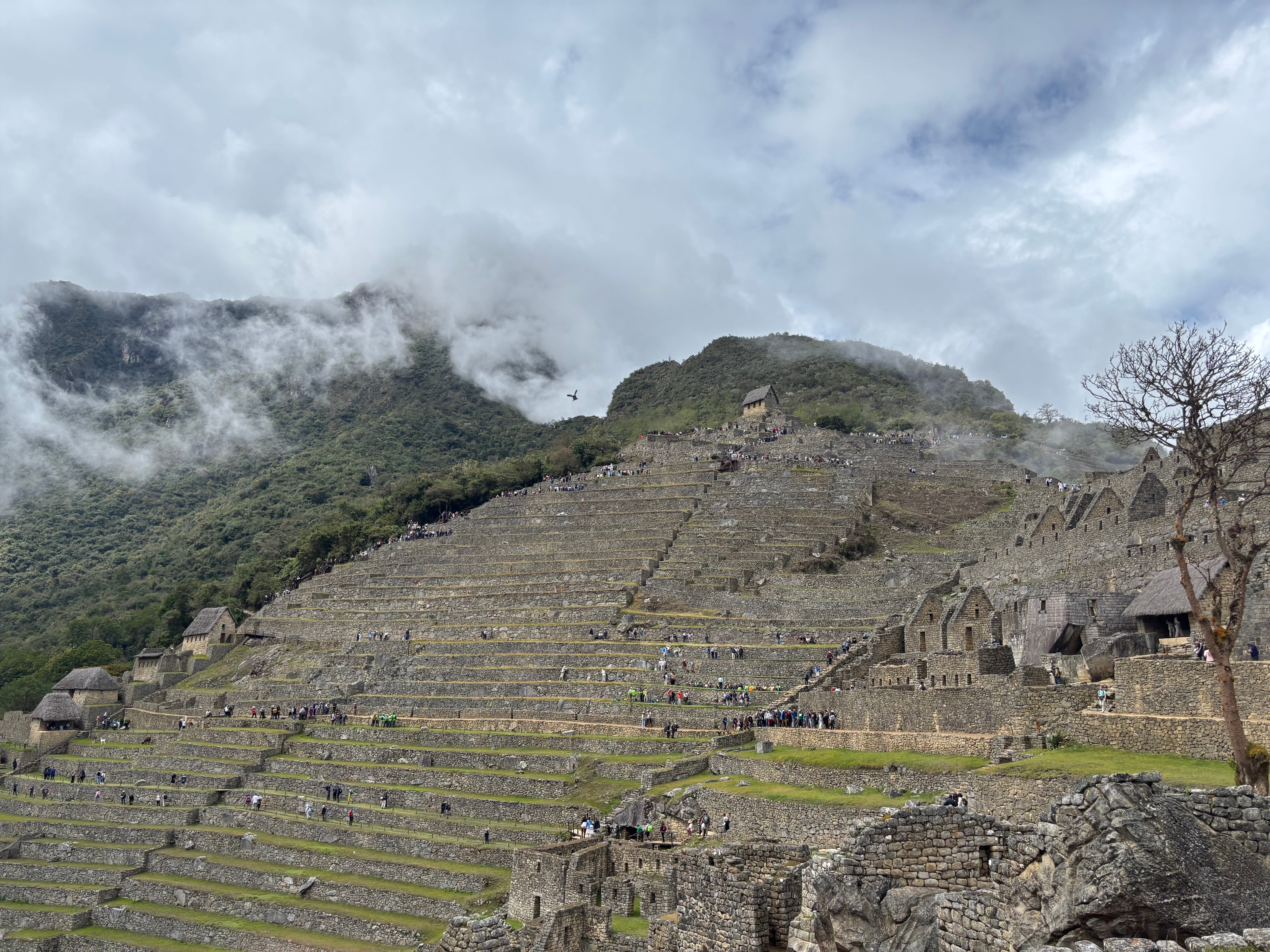
At last the mist cleared long enough for me to take this shot:
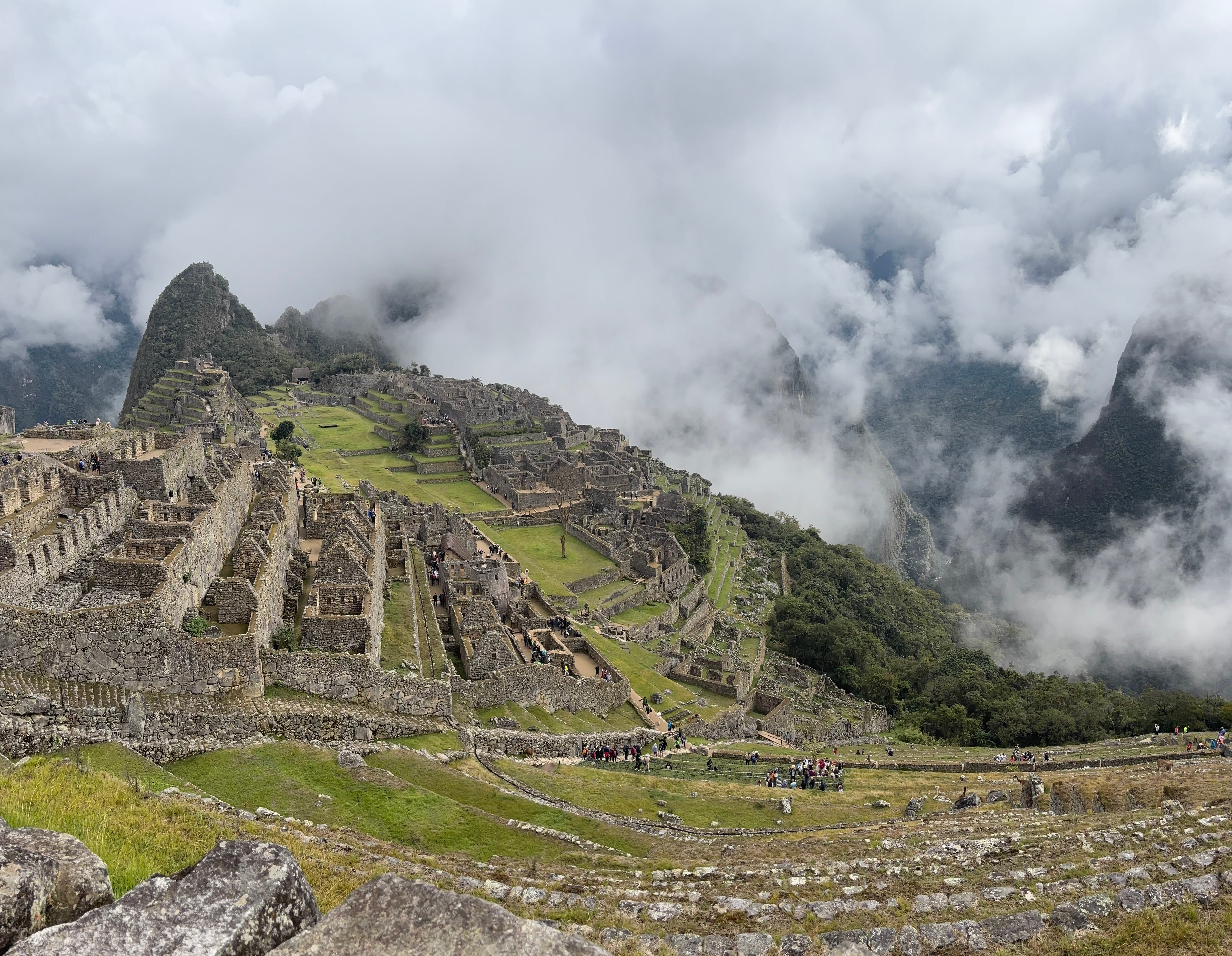
And it’s good that I took the photo when I did—the mist shrouded the view only a few minutes later. We were now set to check out the rest of the site. And what we saw proved equally breathtaking up close as it had been from a distance.
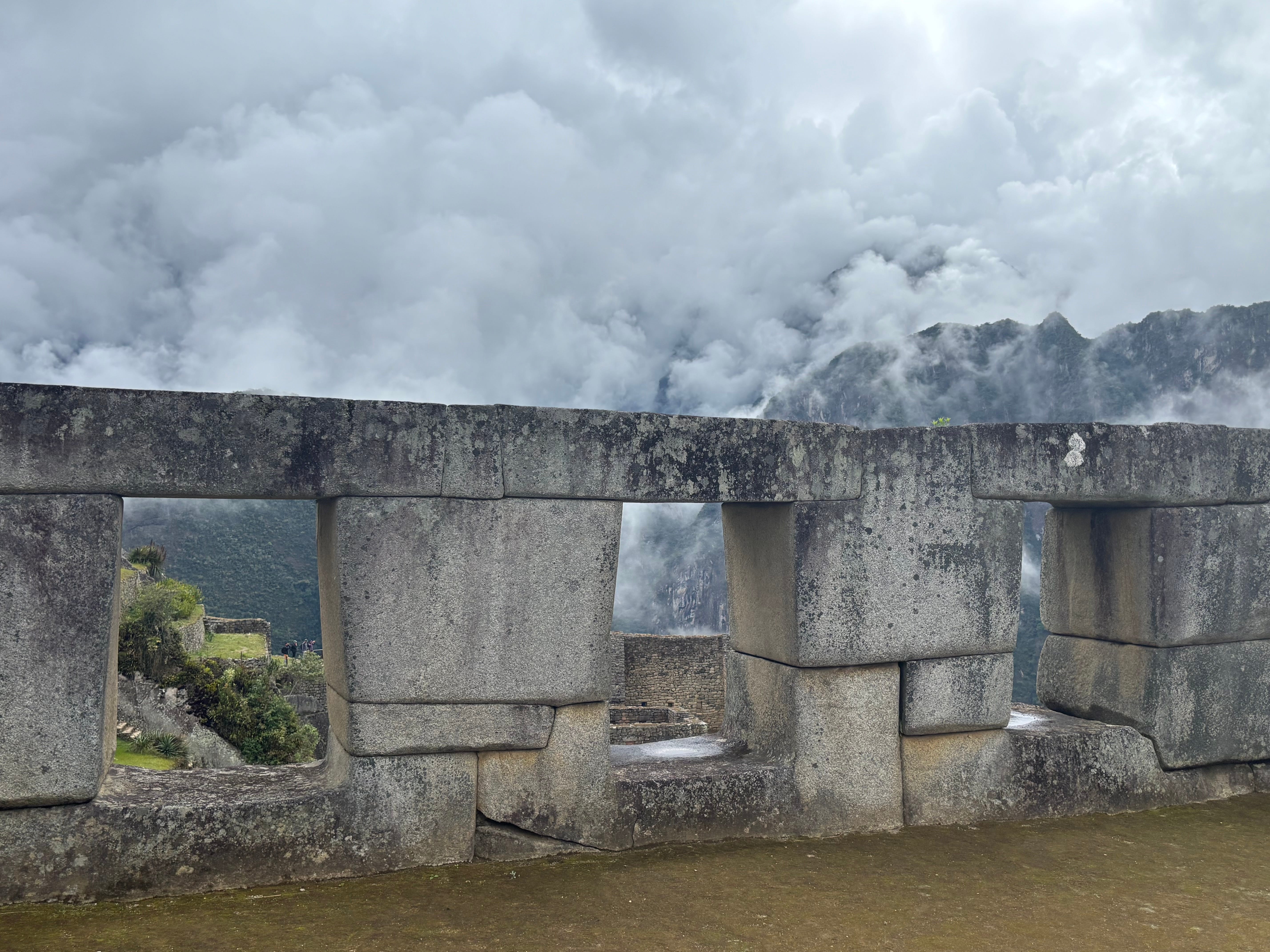
The mortar-free Inca stonework competed with the misty skyline for impressiveness, especially at the Temple of the Three Windows (fifth picture down):
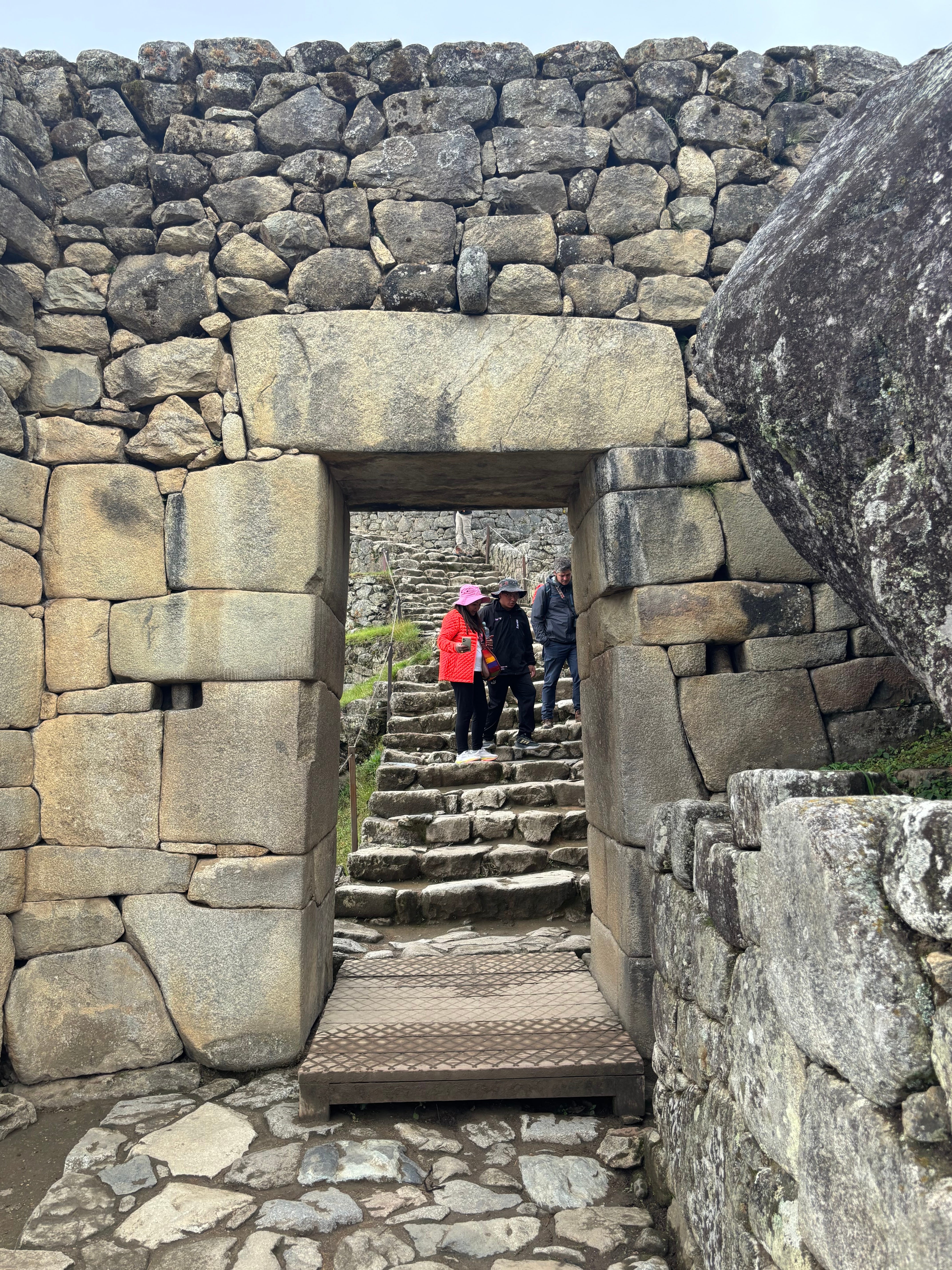
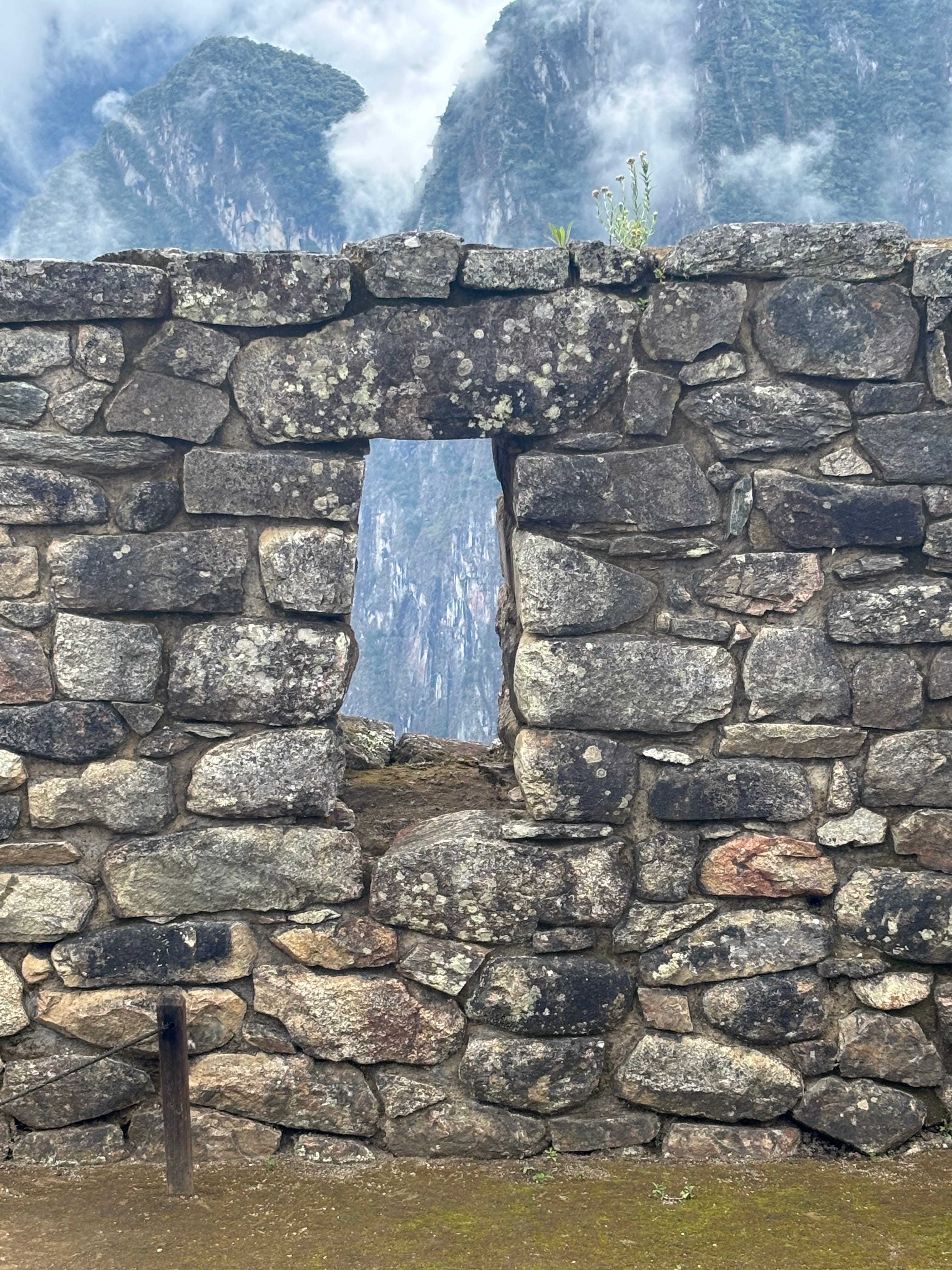
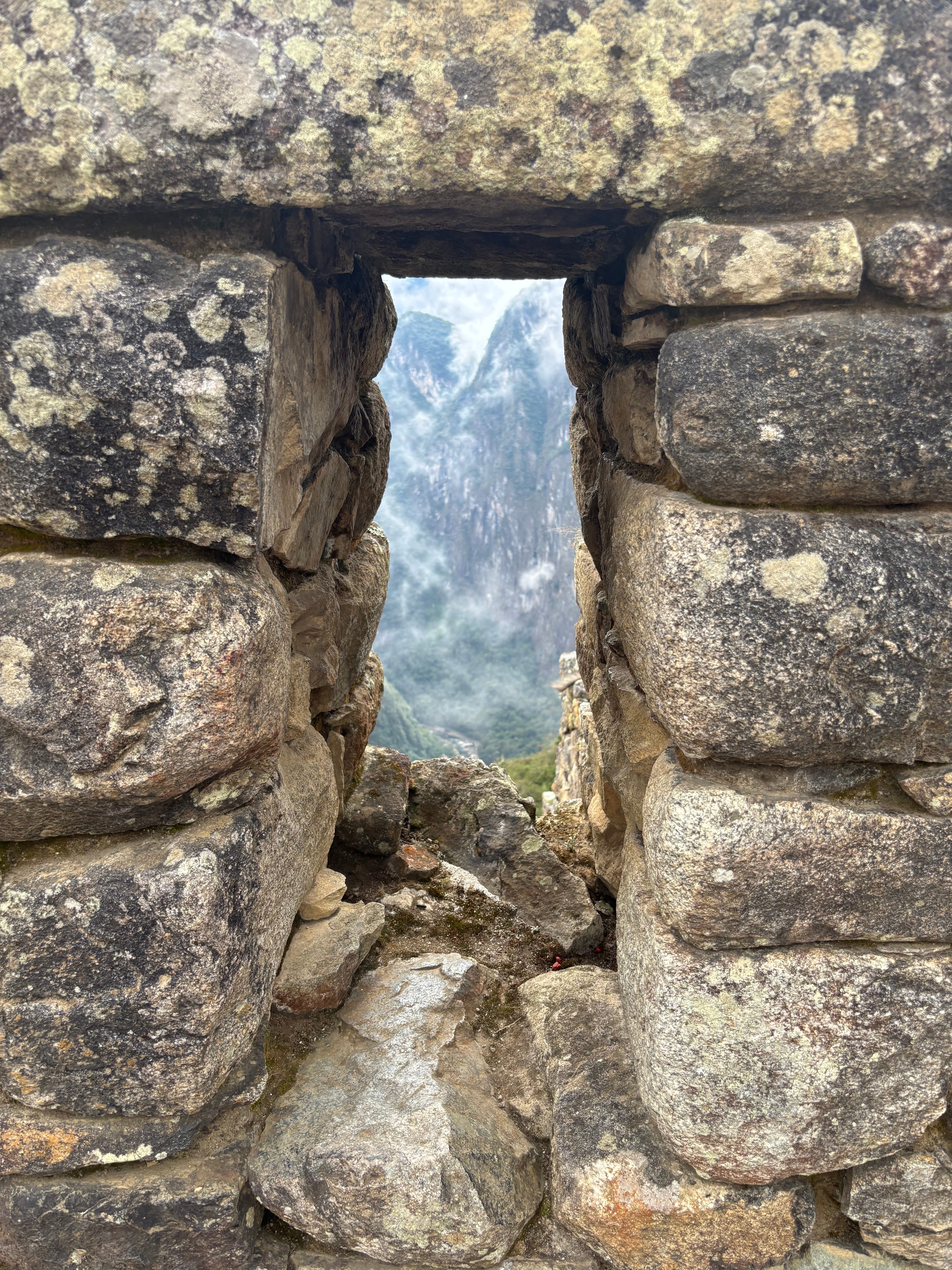
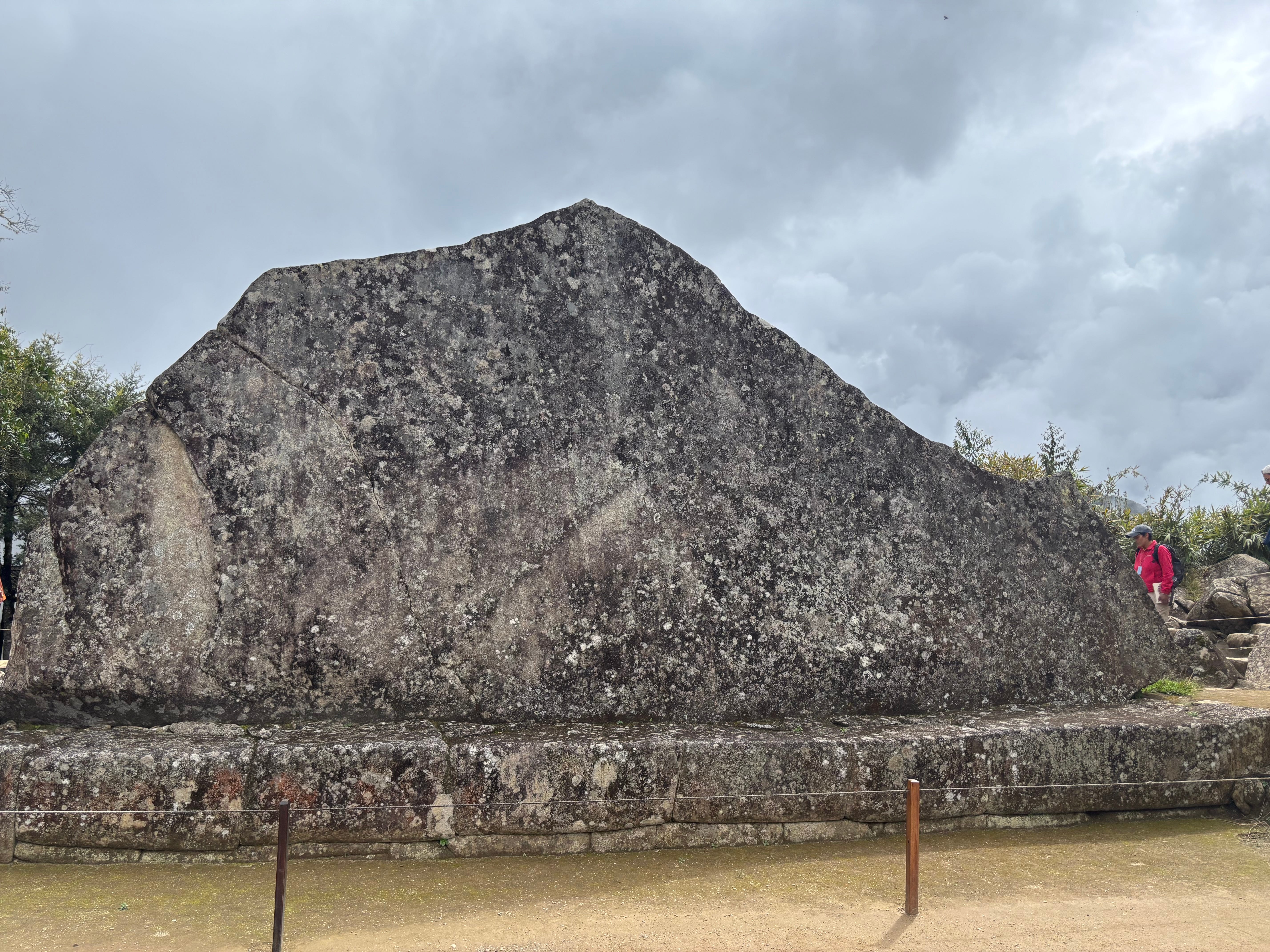
Alas, the mist worked against us at the Sacred Rock. According to our guide, the rock was hewn to mimic the mountains behind it. With the clouds blocking the view, we would have to take our guide’s word for it.
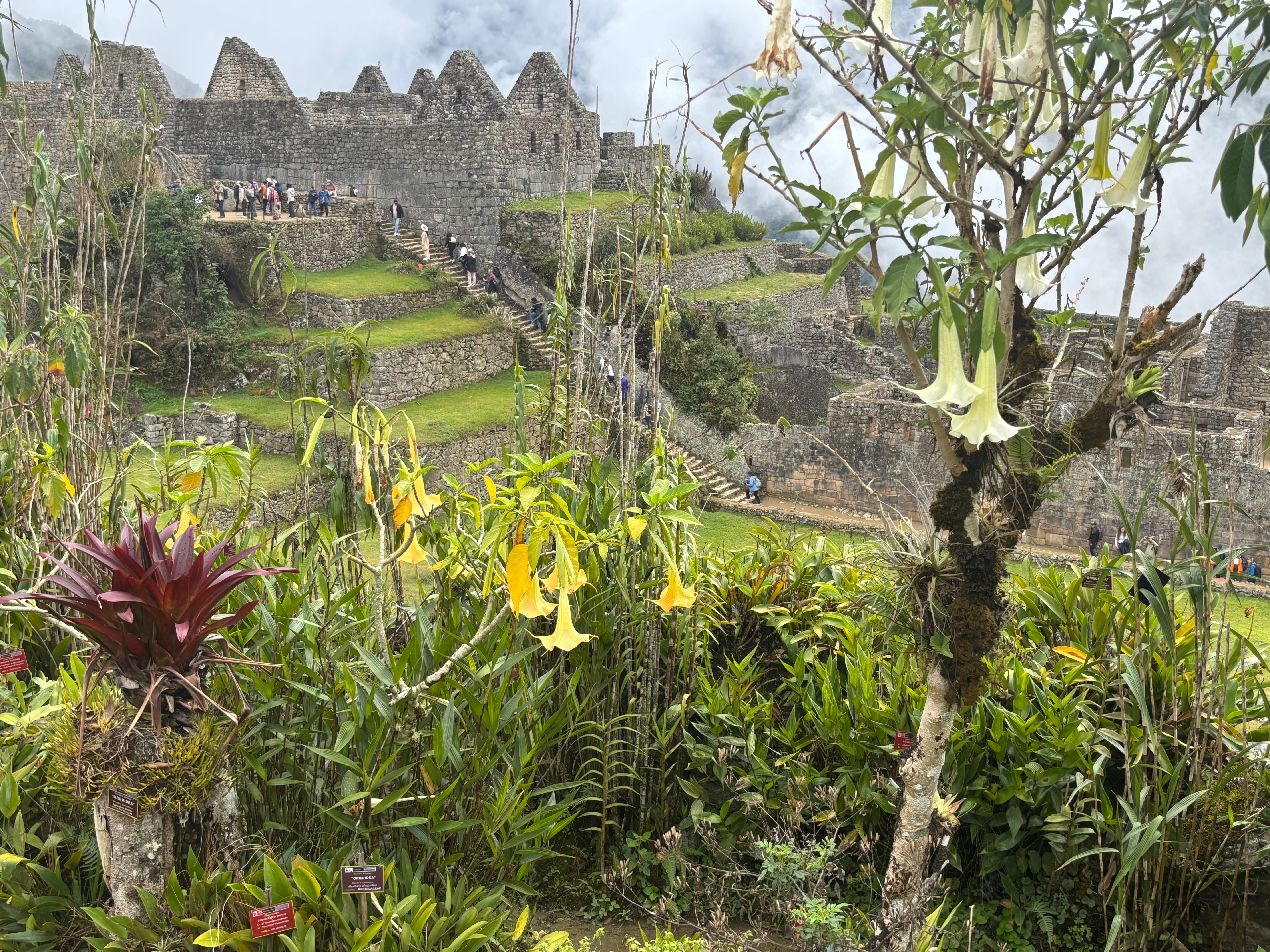
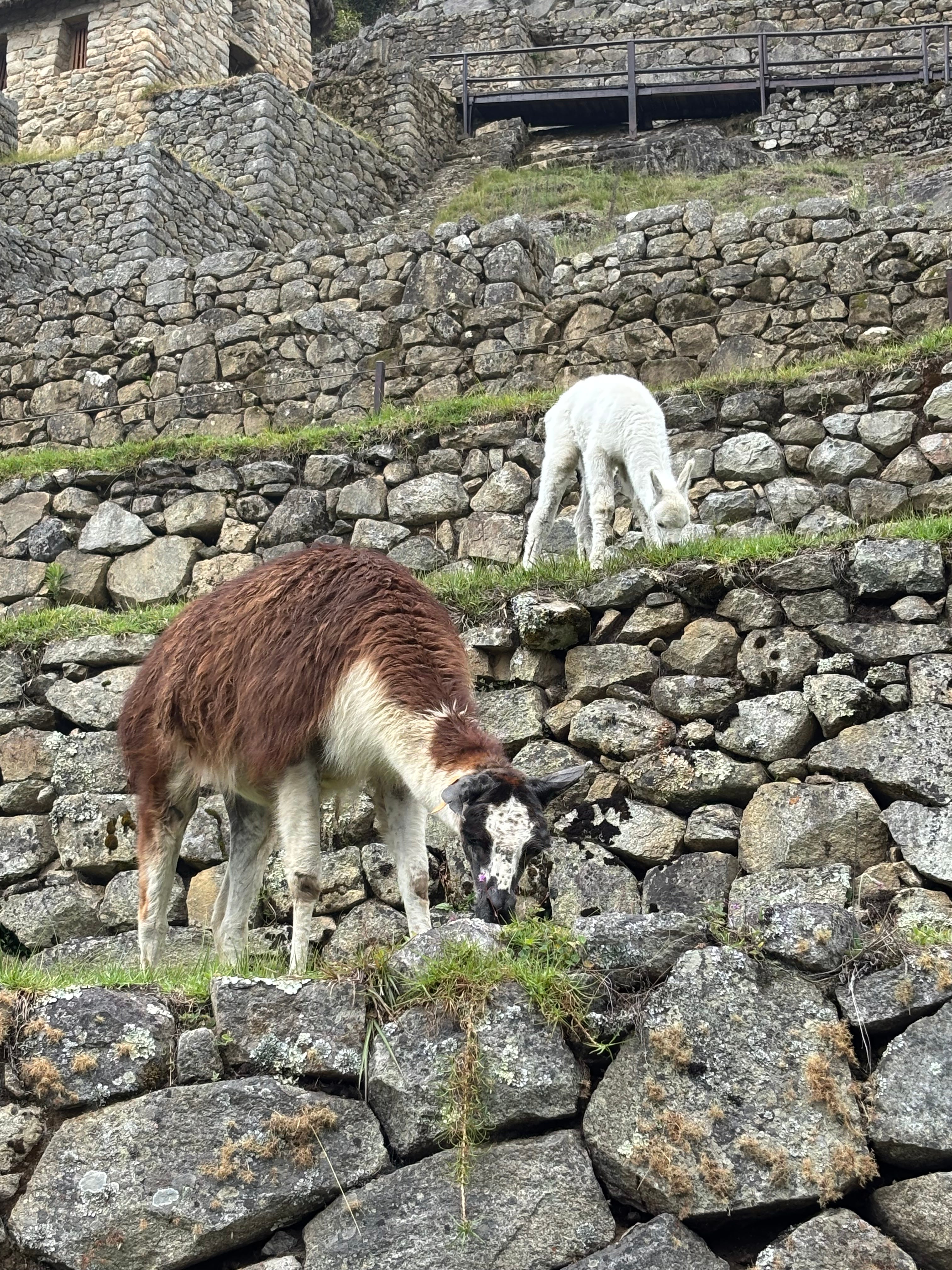
The site’s keepers had planted a botanical garden, to mimic what the place might’ve looked like back in the 1450s. Llamas grazed on the site’s ancient terraces as they must’ve done over 500 years ago.
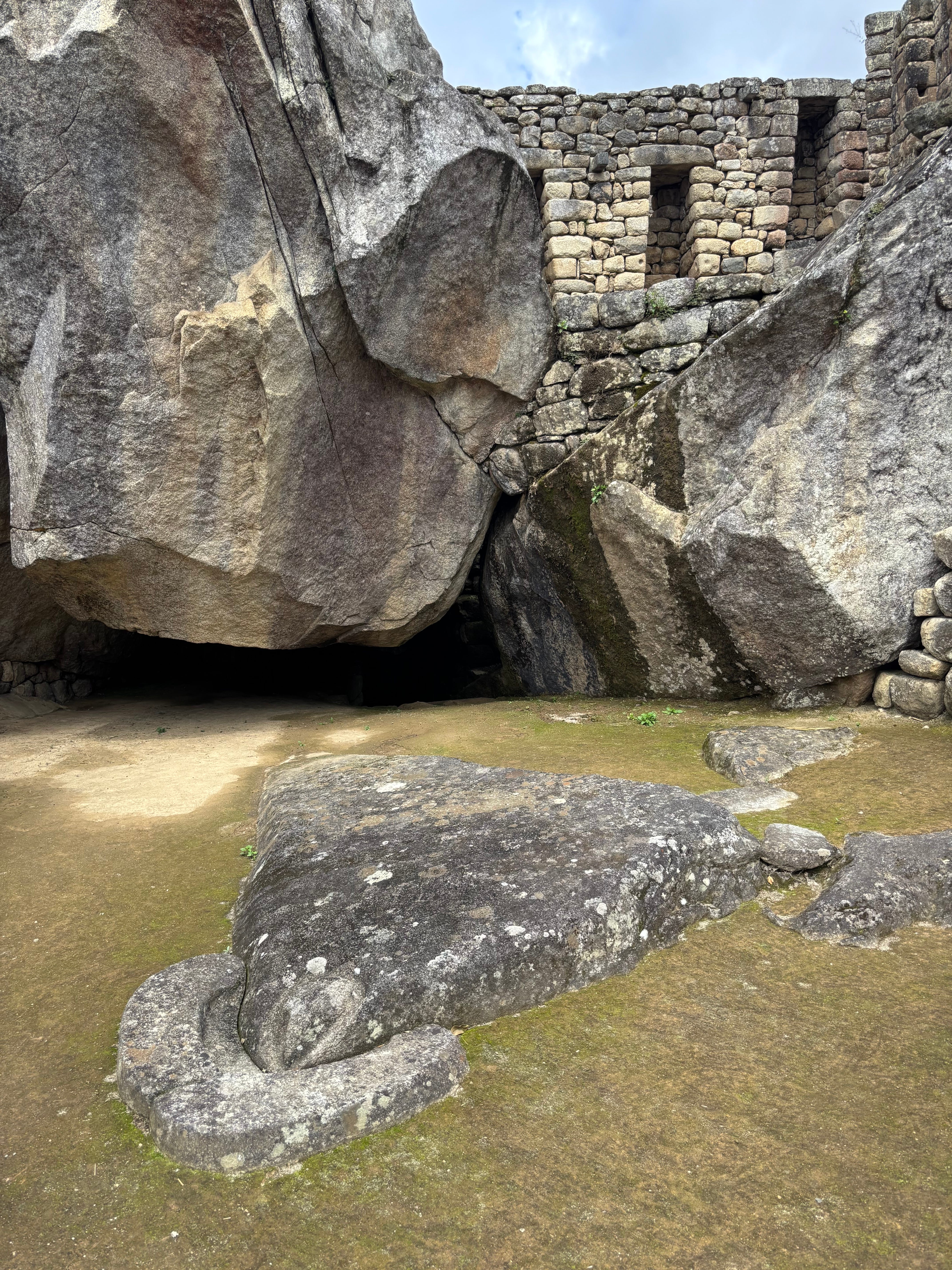
I would’ve loved to see an actual Andean condor wheeling in the air, but given that Andean condors can soar as high as 21,000 feet—higher than Salkantay Mountain—I knew my chances were slim. (Machu Picchu stands at a paltry 7,972 feet.) I consoled myself with a stone version at the Temple of the Condor. The boulders in the back are supposed to be the sacred bird’s wings, while his head and beak are embedded in the ground:
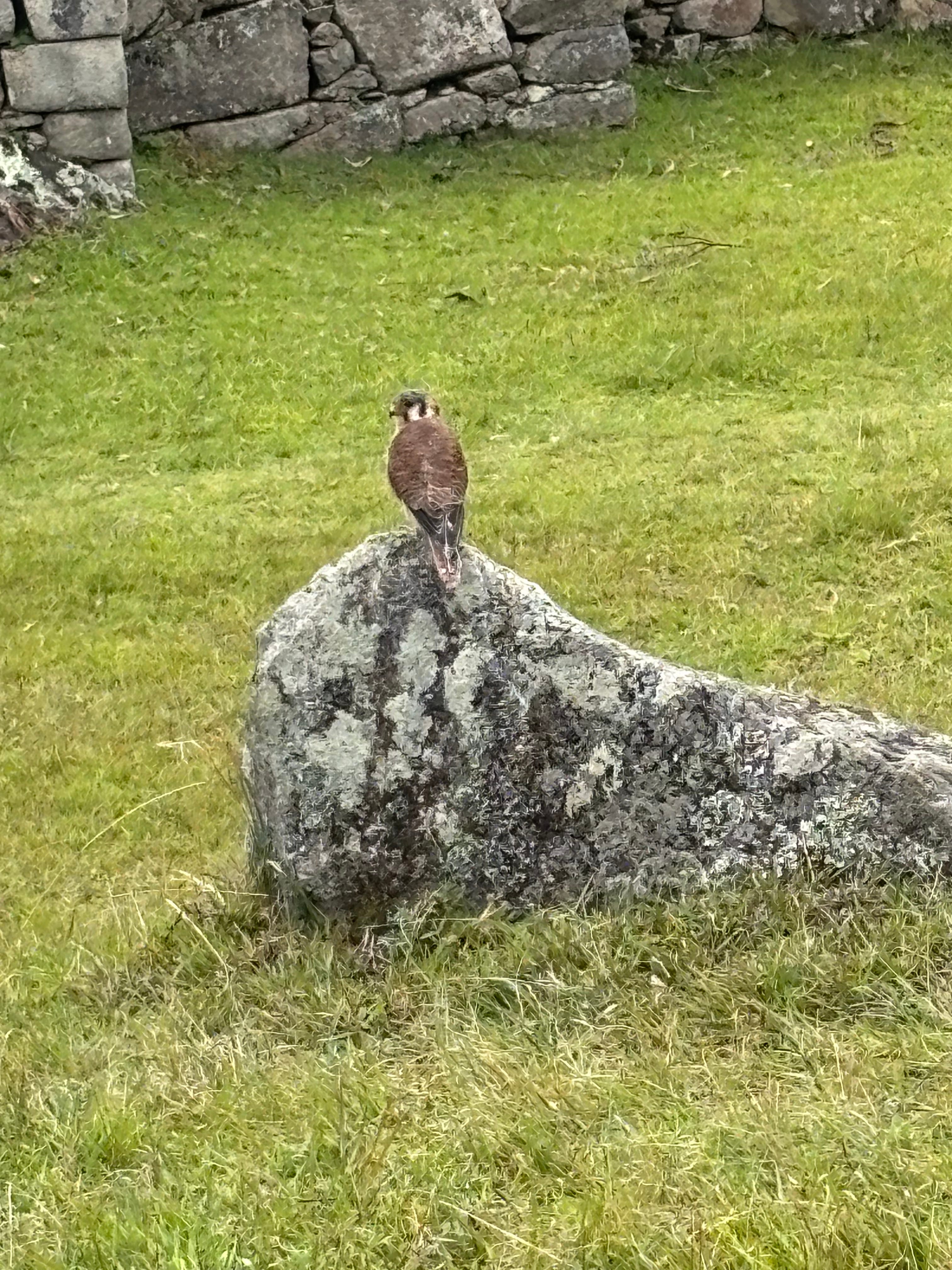
But my best photo of the morning came thanks to an actual live bird. After some internet sleuthing, I’m reasonably certain that the bird we found hunting among the ruins is a variable hawk (but please let me know if you think I’m wrong). Just watching him glide among the ancient stones, indifferent to us tourists, was special. I’d consider myself lucky to capture him in profile. Then he took off from his perch at the exact moment I clicked my camera for an insurance shot.
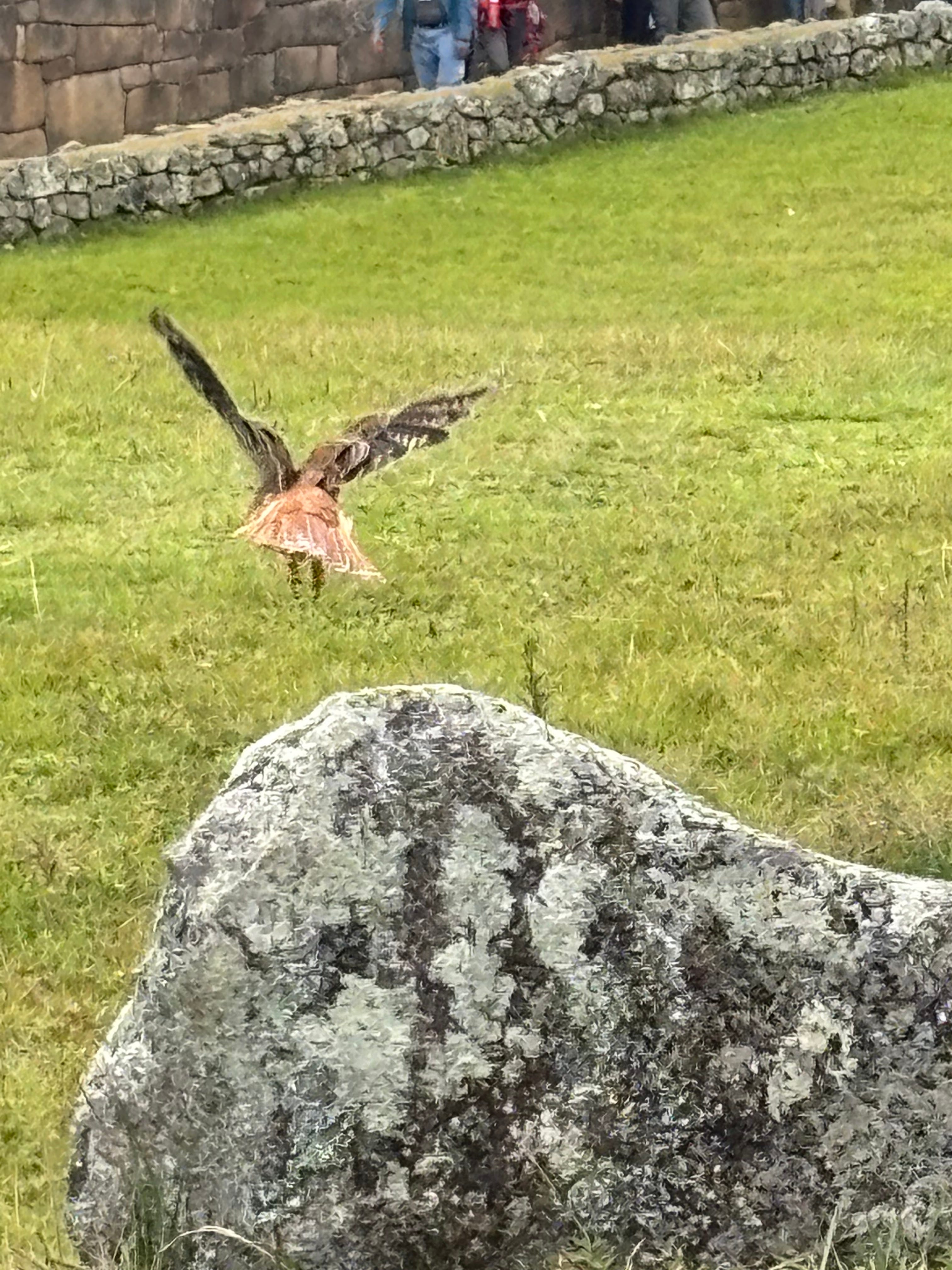
A shifting sky, a gliding bird, a chat with a young couple from Taiwan—these will be my best, most personal memories of Machu Picchu. A different experience than the Salkantay Pass, but no less spectacular.
We descended the mountain and reached Aguas Calientes at around ten thirty. Dan and I celebrated with some pre-lunch ice cream. Soon the mist turned into actual rain, a steady but relentless downpour that didn’t let up until well into the afternoon. The folks still on Machu Picchu must be getting soaked. We’d been lucky to escape when we did, and to see what we’d seen.
Coming Sunday: the flowers (and more birds) of Peru.